
Tegalalang Rice Terrace
Complete Tegalalang Rice Terrace Information Guide
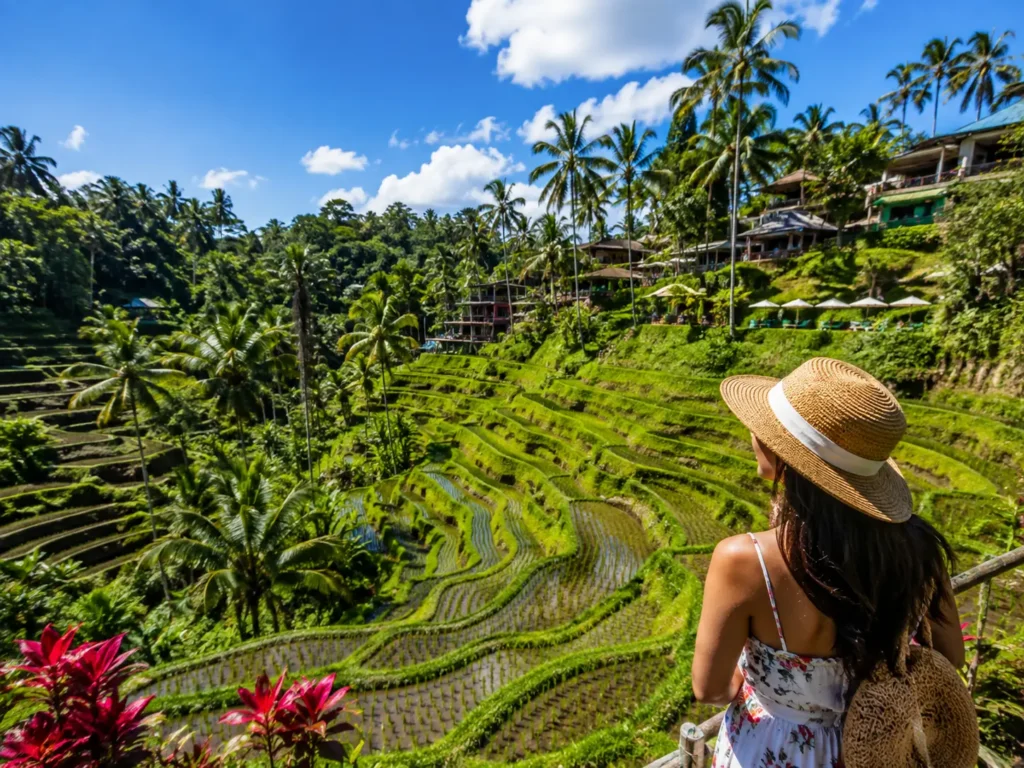
Tegalalang Rice Terrace—also written Tegallalang and known as Ceking Rice Terrace—is a steep, layered rice-field valley in Gianyar, north of Ubud. It suits visitors who want an iconic landscape, a short walk and a convenient Ubud-area stop, but a simple terrace visit is very different from the nearby swing, photo-spot and day-club venues.
What to Know Before Visiting Tegalalang Rice Terrace
Choose the visit format first—upper viewpoint, simple terrace walk, guided Ubud tour, private attraction or day-club stop—then compare the price. The same destination name can lead to very different experiences.
This guide helps you decide whether Tegalalang is worth adding to your route, which type of entrance suits you, what a realistic visit costs and whether the walking conditions work for your group. It also separates the rice-terrace landscape from the commercial swing, photo and day-club venues that share the same destination name.
Tegalalang Rice Terrace Quick Facts
Tegalalang is best treated as a short scenic stop unless you add a private attraction, meal, activity or longer walk.
| Practical detail | What to expect |
|---|---|
| Location | Ceking, Tegallalang District, Gianyar Regency, north of Ubud |
| Also known as | Tegallalang Rice Terrace or Ceking Rice Terrace |
| Main experience | Valley viewpoints, stepped paths, working rice plots and irrigation channels |
| Common simple-access cost | Approximately IDR 15,000–50,000 per person, depending on the entrance |
| Extra costs | Parking, local path contributions, swings, photo spots and private venues may be separate |
| Opening times | No single schedule; most visitor access operates during daylight, while private venues set their own hours |
| Best time | Usually 07:00–09:00 for cooler conditions and fewer visitors |
| Time to allow | 30–60 minutes for upper views; 60–90 minutes for a terrace walk |
| Terrain | Steep steps, narrow or uneven paths and mud after rain |
| Accessibility | Upper roadside viewpoints are easier; lower paths are not wheelchair- or stroller-friendly |
| Advance booking | Not normally needed for a simple visit; useful for tours, transport and private venues |
Is Tegalalang Rice Terrace Worth Visiting?
Yes, when you want a dramatic rice-terrace view close to Ubud and are comfortable with a busy, commercial visitor area.
It is particularly suitable when:
- You are already visiting Ubud: the terraces can fit into a half-day or full-day central Bali route.
- You want a compact scenic stop: the upper viewpoint delivers the main valley view without a long hike.
- You can arrive early: cooler air and fewer tour groups improve the experience considerably.
- You want optional add-ons: swings, photo platforms, cafés and private attractions are available nearby.
It may be better to skip it when:
- You expect a quiet rural walk: the main Ceking area is one of Bali’s most visited inland attractions.
- You need a step-free route: the lower terrace paths involve steep and uneven ground.
- You want guaranteed bright-green rice: planting and harvesting happen plot by plot.
- You dislike staged photo attractions: tourism businesses are highly visible around the valley.
- You want a large agricultural landscape: Jatiluwih offers far greater scale and longer walking routes.
The landscape is visually impressive, but the standard visit is brief. Its value comes from the steep valley form, easy access from Ubud and the ability to choose anything from a quick viewpoint stop to a longer commercial experience.
Planning Your Tegalalang Visit
Use the sections below to choose the right visit format, time, access point and transport before you arrive.
What Exactly Are You Visiting?
Tegalalang is a real rice-growing valley surrounded by a visitor economy; it is not one single park with one universal gate.
The terraces are shaped by Balinese irrigation practices associated with the subak system. Many visible plots remain agricultural land, while roadside entrances, restaurants, swings, photo platforms and private attractions manage different parts of the visitor experience.
| Visit format | Best for | Main limitation |
|---|---|---|
| Upper roadside viewpoint | A quick photograph, limited time or visitors avoiding steep steps | Less immersion; traffic and roadside businesses remain visible |
| Simple Ceking terrace walk | Visitors who want to descend among the terraces at relatively low cost | Steep, hot and slippery in places; access charges can vary |
| Managed attraction venue | Swings, photo installations, clearer facilities and a structured visit | Separate entrance and activity charges; more commercial atmosphere |
| Day club or dining venue | A longer meal, pool or leisure visit with terrace views | Not the same as a simple agricultural walk; venue rules and spending conditions apply |
Is Tegalalang the Same as Alas Harum or Cretya Ubud?
No. Alas Harum Bali and Cretya Ubud are separate commercial venues in the Tegallalang area. Their admission, activity and age rules do not apply to every rice-terrace entrance, and paying for simple terrace access does not automatically include either venue.
Choose the landscape first and the venue second. Otherwise, a search for “Tegalalang Rice Terrace” can lead you to a day club or activity park when you only intended to walk through the fields.
How Much Does Tegalalang Rice Terrace Cost?
Allow roughly IDR 15,000–50,000 per person for simple terrace access, but expect separate charges when you choose a private venue or activity.
| Cost item | Realistic indication | What to confirm |
|---|---|---|
| Simple terrace entrance | Approximately IDR 15,000–50,000 per person | Which access point the ticket covers |
| Local path or farmer contribution | Variable; a small cash payment may be requested on some routes | Whether it is required to continue and what land it covers |
| Managed attraction entrance | Often around IDR 50,000–70,000 or more | Whether photo areas or only general access are included |
| Swing, zip-line or staged photo package | Commonly around IDR 150,000–400,000 or more | Number of activities, photographs, dress rental and entrance fee |
| Day club or dining venue | Separate venue charge, first-drink charge, minimum spend or reservation terms may apply | Age rules, pool access and redeemable credit |
| Parking | A small local charge may apply | Pay at the designated area and ask for the current rate |
These are comparison ranges, not one official price list. Charges change by entrance, venue and package, and an online Ubud tour may or may not include the local ticket.
- Carry small rupiah notes: cash remains useful for local entrances, parking and path payments.
- Ask what the payment covers: one ticket may not include a swing, lower path or neighbouring venue.
- Compare the final amount: confirm taxes, transfers, photographs, meals and activity fees before booking.
- Do not bypass a staffed entrance: the fee supports access and local management even when another route appears open.
When Is the Best Time to Visit?
Visit between about 07:00 and 09:00 for the best balance of cooler weather, softer light and fewer tour groups.
| Time | What it is usually like | Best for |
|---|---|---|
| 07:00–09:00 | Cooler, quieter and easier for walking | Most visitors and photographers |
| 09:00–11:00 | Brighter, warmer and increasingly busy | Visitors arriving from nearby Ubud |
| Midday | Hottest light, limited shade and the largest group overlap | A short upper-viewpoint stop |
| Late afternoon | Cooler again, but parts of the valley fall into shade | Visitors already travelling north of Ubud |
There is no single opening time for the entire landscape. Many managed access points operate roughly during daylight hours, while restaurants, attractions and day clubs set separate schedules. Check the exact venue when an activity or reservation matters.
Rain can arrive in any season. Light rain does not automatically prevent a visit, but the lower paths can become slippery quickly and heavy rain can make descending a poor decision.
Will the Rice Terraces Be Green?
No month guarantees a completely bright-green valley because the visible plots follow different planting and harvesting stages.
On one visit you may see flooded reflective paddies, young shoots, mature green rice, golden plants and newly harvested brown earth in the same valley. That variation is normal in a working agricultural landscape.
- Dry periods: usually make the paths firmer and the sky clearer, but do not guarantee greener rice.
- Wetter periods: can support lush growth, yet cloud, heavy showers and mud may reduce visibility and walking comfort.
- Recent harvest: can leave some plots brown or bare even when surrounding areas are green.
- Photography expectations: choose Tegalalang for its terrace shape and valley structure, not for a guaranteed colour.
Images used in advertisements often show one ideal planting stage. Treat the current field condition as part of the visit rather than a defect when farmers are between crops.
How Long Should You Allow?
Most visitors need 60–90 minutes for the view, photographs and a moderate terrace walk.
- 30–45 minutes: upper viewpoint, a drink and a few photographs without descending far.
- 60–90 minutes: a practical visit with steps, lower viewpoints and unhurried stops.
- Two to three hours: terrace walking combined with a swing, managed attraction or meal.
- Half or full day: transport from another resort area plus several Ubud or Gianyar stops.
A tour advertised as a full-day Tegalalang experience normally spends only part of the day at the terraces. Check the planned stop length when walking matters more to you than collecting several attractions.
How Do You Get to Tegalalang Rice Terrace?
Most visitors arrive by scooter, taxi or private driver, and the exact entrance pin matters more than the general destination name.
Central Ubud is commonly about 20–40 minutes away, but traffic on the north–south road can extend the journey. From South Bali, the drive often becomes a substantial part of the day.
- Private driver: the simplest choice when combining Tegalalang with temples, waterfalls or central Ubud.
- Taxi or app-based car: practical for a direct visit, but agree on the pickup point because the roadside is busy and entrances are spread out.
- Scooter: efficient only for properly licensed riders who are confident in Bali traffic and parking conditions.
- Tour transfer: check whether pickup is private or shared and whether the rice-terrace stop is at Ceking, Alas Harum or another venue.
Do not ask a driver to stop suddenly beside the viewpoint. Use a designated parking or drop-off area, then cross or walk along the road carefully.
Before departure, send the exact map pin or venue name to the driver. “Tegalalang Rice Terrace” can refer to several nearby entrances and businesses.
What Should You Wear and Bring?
Wear breathable clothing and secure shoes with grip; ordinary flip-flops are a poor choice for the lower paths after rain.
Bring:
- Small rupiah notes: useful for entrance, parking and local path payments.
- Drinking water: shade is limited once you descend.
- Sun protection: use a hat and sunscreen, especially after 09:00.
- Light rain protection: a compact rain jacket or umbrella is useful in changeable weather.
- Insect repellent: helpful around wet vegetation and shaded areas.
- A secure bag: keep hands free on steps and narrow paths.
A sarong is not required for the rice terraces. Carry suitable temple clothing when Tegalalang is part of a route that includes Tirta Empul or another place of worship.
Avoid long trailing clothes for the walk, valuable jewellery and footwear you would be upset to stain with mud.
What Facilities Are Available?
Basic facilities are easy to find around the main road, but there is no single standard across all entrances.
- Parking: available at managed entrances, restaurants and attractions, sometimes for a separate fee.
- Toilets: commonly available at cafés and private venues; condition and access rules vary.
- Food and drinks: the road has many cafés and restaurants with terrace views.
- Shade and seating: easier to find at upper venues than on the lower paths.
- Changing or locker facilities: mainly associated with larger activity or day-club venues, not the simple terrace walk.
- Card payment: common at larger businesses but not reliable for small local charges.
Use the toilet and buy water before descending. Do not assume a lower path has rest areas, lighting or staff at every junction.
Should You Book Tegalalang Rice Terrace in Advance?
No reservation is normally required for a simple viewpoint or terrace walk, but booking is sensible when transport, activities or a fixed schedule matter.
Book ahead when:
- You need hotel pickup: transport terms and pickup areas vary between listings.
- You want a private Ubud day tour: an early start and logical route are easier to secure in advance.
- You plan to use a swing or private attraction: confirm current entry, activity slots and restrictions.
- You are visiting with a group: parking, vehicle size and walking pace need coordination.
- You want a day club: reservation, age and spending conditions may apply.
- Your schedule is tight: written confirmation reduces confusion about the exact meeting point.
For an independent visit, arrive with small cash and a chosen entrance rather than buying an unspecified “Tegalalang ticket” online. For a tour, obtain the stop name, time at the terraces, included tickets and return transport in writing.
Walking, Access & Suitability
How Difficult Is the Walk?
The terrace walk is not technically difficult, but steep steps, heat, mud and missing handrails make it more demanding than the roadside view suggests.
Common conditions include:
- Steep descents and climbs: every route into the valley requires returning uphill.
- Narrow earth or stone paths: surfaces can be uneven, broken or slippery.
- Irrigation channels: open water edges and small crossings require attention.
- Limited shade: heat becomes tiring quickly after mid-morning.
- Changing access: a path may be closed, redirected or managed by a different landholder.
Wear shoes with grip, use the marked route and turn back when rain or mud makes the next section uncomfortable. Do not step across planted beds or irrigation banks to create a shortcut.
Visitors who do not want the climb can still see the main valley from upper viewpoints and selected restaurants.
Is Tegalalang Suitable for Children, Older Visitors and Limited Mobility?
Upper viewpoints suit many families and older visitors, but the lower paths are unsuitable for wheelchairs and difficult with a stroller.
| Visitor | Best approach | Main concern |
|---|---|---|
| Young children | Stay near a secure upper viewpoint or choose only a short descent | Open edges, steps, heat and slippery ground |
| Older children | A supervised terrace walk can work when they follow instructions | Running near irrigation channels or unstable edges |
| Older visitors | Use a roadside viewpoint, café or managed venue with easier access | Long stair climbs and few handrails |
| Wheelchair users | Choose a level upper viewing or dining area confirmed in advance | The valley paths are not step-free |
| Stroller users | Leave the stroller in the vehicle and use a carrier only when safe | Narrow stairs and uneven paths |
Private swings and adventure activities have their own minimum age, height, weight and health rules. A child being allowed into a venue does not mean every activity or path is suitable.
Ask the driver or venue for the nearest practical drop-off point when someone in the group should avoid stairs.
Respecting the Rice Fields
How Should You Behave Around the Rice Fields?
Treat the terraces as agricultural land, not as an unrestricted photo set.
- Stay on established paths: do not step into planted rice or damage irrigation banks.
- Follow local access instructions: a route can cross privately managed land.
- Ask before photographing people closely: farmers and residents are not part of a staged attraction.
- Keep payments transparent: use staffed booths or ask clearly what a local charge covers.
- Take all rubbish out: bins are not available on every path.
- Ask before flying a drone: land, venue and airspace permission should never be assumed.
The terraces remain visually valuable because water management and farming continue. A respectful visit avoids interfering with that work.
Combinations & Alternatives
What Can You Combine with Tegalalang Rice Terrace?
Combine Tegalalang with one or two Ubud or Gianyar experiences that follow the same route rather than filling the day with distant stops.
| Route style | Sensible combination | Planning note |
|---|---|---|
| Culture and nature | Ubud Monkey Forest plus Tegalalang and a Bali purification ceremony | Start early and avoid crossing central Ubud repeatedly |
| Scenic activity | Tegalalang plus Bali Swing | Decide whether you want a simple view or a full swing venue before arrival |
| Active day | Tegalalang plus ATV Bali or Rafting Bali | Choose one major activity; adding both creates a long day |
| Waterfall route | Tegalalang plus Tegenungan Waterfall | Plan the southbound order to reduce backtracking |
| Hands-on Ubud day | A Bali cooking class or Bali workshop plus the terraces | Protect the class start time from traffic delays |
Tegalalang does not combine efficiently with Uluwatu, Nusa Dua or far-west Bali unless the terraces are only one brief stop in a very long day.
Tegalalang, Jatiluwih or Sidemen: Which Rice Landscape Should You Choose?
Choose Tegalalang for convenience and a dramatic short view, Jatiluwih for scale and longer walking, or Sidemen for a slower rural stay.
| Place | Best for | Main trade-off |
|---|---|---|
| Tegalalang | Visitors based in Ubud who want a compact, steep valley and optional attractions | Busy, commercial and relatively small |
| Jatiluwih | Expansive walking routes, broad agricultural scenery and a recognised UNESCO component landscape | Much longer transfer for most visitors |
| Sidemen | Quiet village scenery, countryside walks and an overnight rural atmosphere | No single iconic entrance or tightly organised short stop |
Tegalalang uses the subak tradition, but convenience should be the main reason to choose it. Visitors seeking the most extensive rice-field experience should not assume Bali’s most photographed terrace is automatically the most complete one.
Frequently Asked Questions
Is Tegalalang Rice Terrace a UNESCO World Heritage Site?
No. Tegalalang demonstrates the wider Balinese subak tradition, but UNESCO’s inscribed Cultural Landscape of Bali names separate component sites, including the Pakerisan watershed, Catur Angga Batukaru landscape, Ulun Danu Batur and Taman Ayun. Tegalalang itself is not named as one of those components.
Why Is It Spelled Tegalalang, Tegallalang and Ceking?
Tegallalang is the common official spelling of the district and village area. Tegalalang is a widespread English-language variant. Ceking refers to the well-known valley and panorama area most visitors mean when they say Tegalalang Rice Terrace.
Can You See the Terraces Without Paying for a Swing?
Yes. Swings, zip-lines, photo installations and day-club access are optional products. Choose a simple terrace entrance or upper viewpoint when you only want the landscape and a walk.
Can You Visit During Rain?
Light rain may still allow an upper-viewpoint visit, but the lower paths become slippery and muddy. Avoid descending during heavy rain, thunderstorms or poor visibility, and do not assume an activity venue will apply the same weather policy as the terrace walk.
Is Sunrise Access Guaranteed?
No. The landscape can be visible from parts of the road early in the morning, but staffed entrances, parking areas, toilets and private businesses may not yet be open. Respect closed access points and pay the normal fee when staff are operating.
Final Advice
Choose the exact experience before you leave: upper viewpoint, simple terrace walk, activity venue or day club.
For most visitors, the strongest plan is an early 60–90-minute visit with shoes that can handle mud, small cash and a clearly agreed map pin. Judge the landscape by its form and farming cycle rather than expecting every field to match a bright-green promotional photograph.
Questions About This Guide?
Contact the editorial team if you have a question about the guide, have noticed information that should be corrected or updated, or would like to share reliable local knowledge, suggestions or feedback.